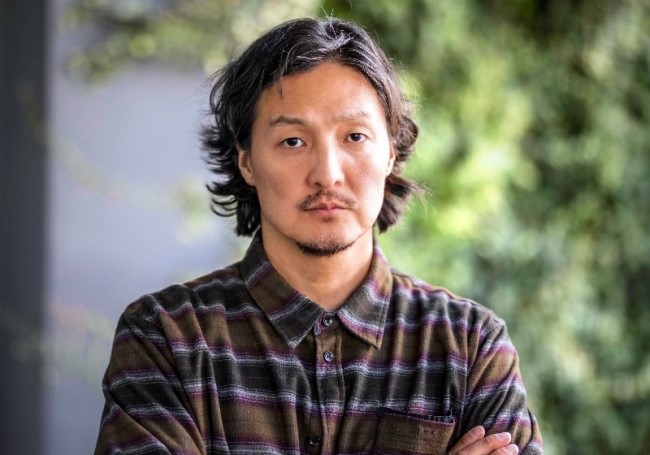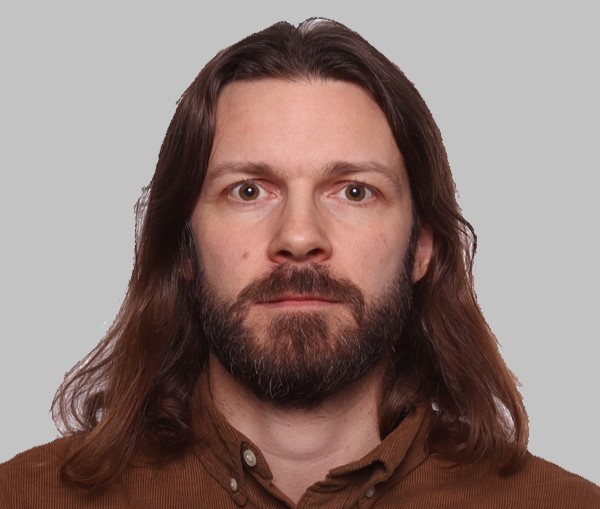
When searching for “Ragnar Freij”, one discovers that this name is associated with a contemporary academic professional whose work and presence are tied to higher education and research — most notably in the fields of mathematics, coding theory, and combinatorics. Although there are limited publicly known details about his early personal life, Ragnar Freij is best identified in academic circles with his formal name Ragnar Freij‑Hollanti, a lecturer and researcher based in Finland at Aalto University.
In this article, we will explore the life, career, teaching contributions, research work, and academic impact of Ragnar Freij, offering a deep dive into what defines him professionally. By framing the narrative around his known scholarly journey and contributions, we aim to give a full, informative profile that aligns with your request for a detailed piece centered around this unique name.
| Attribute | Details |
|---|
| Full Name | Ragnar Freij (also known as Ragnar Freij‑Hollanti) |
| Nationality | Swedish-Finnish (based on academic and professional affiliations) |
| Occupation | University Lecturer, Researcher |
| Field | Mathematics, Combinatorics, Coding Theory, Matroid Theory |
| Current Position | Senior University Lecturer at Aalto University, Department of Mathematics and Systems Analysis |
| Education | PhD in Mathematics, Chalmers University of Technology, Sweden |
| Postdoctoral Work | Technical University of Munich (TUM), Germany |
| Research Interests | Algebraic and geometric combinatorics, Matroid theory, Coding theory |
| Teaching Areas | Discrete mathematics, Graph theory, Combinatorics, Foundations of algebra |
| Academic Contributions | Research publications, international seminars, mentoring students |
| Notable Skills | Advanced mathematical theory, pedagogy, research supervision |
| Professional Recognition | Recognized in European academic circles for contributions in combinatorics and coding theory |
| Years Active in Academia | Since approximately 2012 (post-PhD) |
| Affiliations | Aalto University, Technical University of Munich, Chalmers University of Technology |
Early Life and Academic Foundations of Ragnar Freij
While specific biographical details about the birth and upbringing of Ragnar Freij are not widely documented in publicly accessible biographical databases, the academic trail of his career becomes clear through his educational background and institutional affiliations.
Ragnar Freij earned his doctoral degree in mathematics from Chalmers University of Technology in Sweden. This advanced academic achievement set the stage for a career deeply rooted in abstract mathematical theory and its applications. His work primarily centers on areas such as algebraic combinatorics, geometric combinatorics, and matroid theory — all subfields of mathematics that deal with the structure, arrangement, and interrelationships within mathematical systems.
Chalmers University of Technology has a strong reputation for technical and scientific education in Sweden, and being awarded a PhD there reflects established expertise and a foundation in rigorous mathematical research. Through this degree and early academic work, Ragnar Freij began building a career that would span countries, institutions, and several decades of teaching and research.
Academic Career: From PhD to University Lecturer
After completing his PhD in 2012, Ragnar Freij transitioned into a career in higher academia. His post‑doctoral work included positions that further expanded his scholarly engagement, including a postdoctoral role at the Technical University of Munich (TUM), one of Europe’s leading technical universities.
Since 2018, he has been serving as a Senior University Lecturer at the Department of Mathematics and Systems Analysis at Aalto University — a multidisciplinary research university located in Espoo, Finland, recognized for its strong integration of engineering, mathematics, and technology studies.
As a lecturer, Ragnar Freij is responsible not only for cutting‑edge research but also for instructing and mentoring students across mathematical disciplines. His courses include advanced topics such as graph theory, discrete mathematics, foundations of combinatorics, and other areas central to theoretical computer science and algebra.
Many lecturers at institutions like Aalto University balance teaching with research supervision. Ragnar Freij’s profile indicates his involvement in guiding students, including bachelor’s, master’s, and potentially doctoral candidates, in exploring intricate mathematical problems and developing theoretical understanding through coursework and independent research.
Research Interests and Scholarly Work

Ragnar Freij’s academic identity is deeply shaped by his research. His interests are specifically focused on:
-
Algebraic and geometric combinatorics — mathematical studies concerned with permutations, arrangements, and structures of discrete objects.
-
Matroid theory — an abstract framework in mathematics used to generalize linear independence in vector spaces to more general combinatorial structures.
-
Coding theory — the design of codes and algorithms for ensuring efficient and accurate data transmission, particularly important in communications and cryptography.
These research areas have important applications in mathematics and computer science. For example, coding theory is critical in cybersecurity, data compression, and error correction in digital communications. Matroid theory has connections to optimization problems, network theory, and algorithm design. Through his work, Ragnar Freij contributes to the advancement of theoretical foundations that have real‑world implications in technology and information science.
Public Lectures and Academic Outreach
In addition to his teaching schedule and research publications, Ragnar Freij engages in academic outreach and scholarly presentations. For instance, he has given talks on specialized topics such as derived and hypergraphical matroids — advanced subjects that explore the theoretical underpinnings of structural mathematical relationships — at international academic venues.
These presentations are especially valuable in connecting mathematicians from diverse institutions, allowing the sharing of novel ideas and fostering collaboration. Presentations like these also reflect his role in contributing to the broader mathematical community, where lecturers and researchers disseminate knowledge beyond their home university.
Teaching Philosophy and Academic Impact
While there are no direct published interviews or statements on his personal teaching philosophy, the scope of Ragnar Freij’s teaching responsibilities — ranging from introductory discrete mathematics to highly specialized topics in combinatorics — suggests a commitment to developing both foundational understanding and advanced analytical skills in students.
His ability to teach a range of courses demonstrates pedagogical versatility: enabling students to build strong mathematical fundamentals while providing opportunities for exploration of cutting‑edge topics and independent research. His dual role as a lecturer and researcher positions him as both an educator and a mentor — helping shape the next generation of mathematicians and computer scientists.
International Academic Contributions
Ragnar Freij’s professional journey underscores the international nature of mathematics research. Educated in Sweden, working in Finland, and participating in global academic communities, his career path reflects the transnational landscape of scientific scholarship.
His research has not only contributed to his home institutions but also echoes through scholarly networks wherever mathematicians engage with topics like combinatorics and coding theory. By supervising research and participating in international seminars and conferences, he plays a role in advancing mathematical inquiry and innovation on a broader scale.
Conclusion: The Legacy and Ongoing Work of Ragnar Freij
To date, Ragnar Freij may not be a household name outside academic circles, but within the world of mathematics and higher education, he stands as a respected lecturer and scholar. Through his deep involvement in research areas such as algebraic combinatorics, coding theory, and matroid theory, he represents a modern breed of mathematicians whose work connects abstract theory with practical applications.